
Cold Chain Compliance: Choosing Safety Knives That Perform in Cold Storage
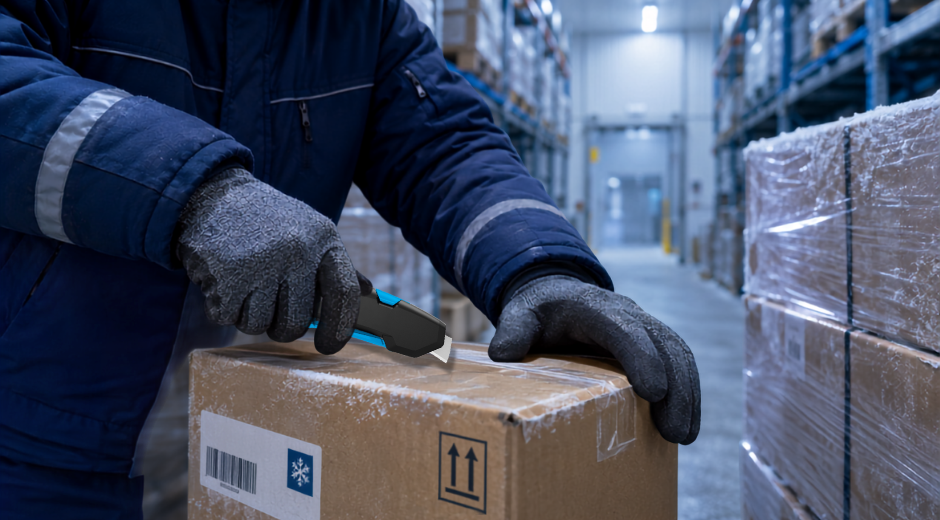
Inside a blast freezer, tools that work on the warehouse floor behave differently. Plastic handles stiffen. Retraction mechanisms are slow. Condensation freezes where it shouldn’t. For food manufacturers running chilled and frozen operations, a cutting tool that isn’t suited to the cold isn’t just inconvenient — it puts worker safety, food safety, and compliance at risk.
Picture a worker opening a wrapped pallet of frozen product at sub-zero temperatures. The blade won’t retract cleanly, so they peel off a glove to control the slider. At that moment, they lose both thermal protection and cut protection. It’s a small, everyday decision — and it’s exactly the kind of decision the right equipment removes.
This article looks at what happens to standard safety knives in cold chain environments, why it matters for WHS and HACCP, and how MARTOR’s tested cutting solutions are built to hold up where ordinary cutters struggle. It’s a practical guide to choosing the safer way to cut in chilled and frozen food manufacturing.
What Cold Conditions Do to a Standard Safety Knife
Cold environments don’t just make people uncomfortable — they physically change how a knife’s materials and mechanisms behave. Three failure modes are the most common.
Handle brittleness and cracking.
Standard plastic handles aren’t made for long-term sub-zero exposure. As polymers cool, they lose flexibility and become brittle. That raises the risk of both outright failure (a handle snapping) and micro-fractures that shed plastic fragments into the production area. In a high-care zone, even a millimetre-sized fragment is a serious foreign-body event.
Retraction mechanism seizure
Knives moving between cold and ambient areas collect condensation. That moisture can freeze within the retraction mechanism, leaving the blade stuck in the extended position. An extended blade is a constant cut hazard — especially in wet, cold conditions where dexterity is already reduced.
Lubricant stiffening
Lubricants used in knife mechanisms can thicken at low temperatures, which compromises smooth operation. Sticky lubricant slows blade retraction, forces workers to apply extra grip and increases the chance of mishandling. This is one reason a knife that performs flawlessly at room temperature can become unreliable in a freezer.
The table below summarises how these failures show up. The temperature points are indicative — the exact thresholds depend on the materials and the duration of exposure.
| Failure mode | What triggers it | Direct consequence | Knock-on risk |
| Handle brittleness | Sustained sub-zero exposure | Handle cracks or snaps | Plastic fragments contaminate product |
| Retraction seizure | Condensation freezing in the mechanism | Blade stuck in the extended position | Constant cut hazard, worker frustration |
| Lubricant stiffening | Low temperatures | Retraction slows or fails | Extra force, grip fatigue, mishandling |
What Cold-Room Equipment Failures Mean for Workers
Equipment failures in cold rooms translate directly into human consequences. The most important one is workers removing gloves to operate a stiff mechanism. That single action removes thermal and cut protection simultaneously, exposing hands to extreme cold and a sharp blade.
Reduced dexterity in the cold increases the risk when a tool is unreliable. A stuck blade needs more force; a brittle handle can give way unexpectedly; a fatigued grip is more likely to slip. None of these is dramatic on its own — together they steadily raise the odds of an injury.
Under Australian WHS obligations, employers have a duty to provide tools that are fit for the working environment. Using a knife that isn’t suited to a facility’s temperature range may fall short of that duty, particularly when the failure patterns are well understood and preventable.
Warning signs your knives may not suit your cold rooms
-
Workers remove gloves to operate the knife.
-
Blade sliders need excessive force.
-
Retraction becomes inconsistent
-
Handles show cracking or brittleness.
-
Staff report difficulty keeping a grip
Any one of these is worth investigating before it becomes an incident.
Contamination Hazards and HACCP Considerations
Cracked or degraded knife handles can shed plastic fragments — a direct contamination risk in food production. Cold chain areas are usually high-care or high-danger zones, where foreign-body contamination is treated extremely seriously.
There’s a hard truth that makes prevention critical: many plastic fragments aren’t metal- or X-ray-detectable, so if one enters the product stream, it may never be caught downstream. This is exactly the gap MARTOR’s Metal Detect (MDP) knives are designed to close. They’re made from metal-detectable plastic, so that if a knife — or a piece of one — ever enters the production process, your existing detectors can find it and your team can remove it. For food and pharmaceutical manufacturers, this turns an undetectable risk into a manageable one.
HACCP plans need to account for physical hazards introduced by equipment, and cutting tools are not exempt. Manufacturers conducting HACCP reviews should assess knife performance in the actual temperature conditions of their facility, rather than assuming a tool that works elsewhere will work in the cold.
| HACCP principle | Application to cutting tools in cold chains |
| Hazard analysis | Assess the risk of handle fragmentation and blade seizure in cold conditions |
| CCP identification | Determine whether a knife's suitability for the temperature range is a control point for physical hazards |
| Monitoring | Inspect knives for cold-related wear; test retraction at operating temperature |
| Verification | Audit knife inventory against the demands of each work area |
| Record-keeping | Document inspection results and the retirement of cold-damaged tools |
How MARTOR’s Knives Hold Up Where Standard Cutters Fail
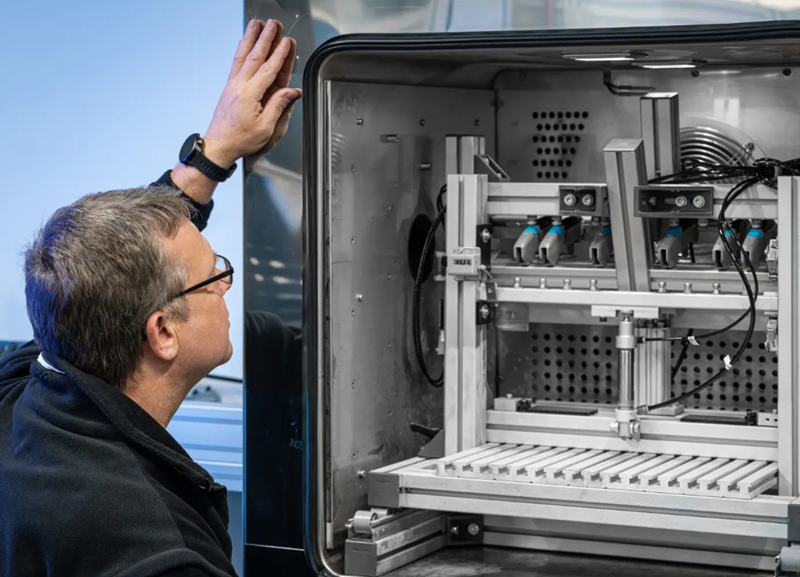
There’s a reason “German-made” is shorthand for it just works. MARTOR knives are designed, made and tested in Solingen — the centuries-old home of blade-making — and quality that’s claimed has to be quality that’s proven. In MARTOR’s test workshop, every cutting tool must repeat its top performance in a climate chamber under extreme cold and heat, and it must pass the drop test even when chilled. That’s a standard step in the process by which the products earn their way to series production. For a cold chain operation, it’s the difference between a tool that has been put through your kind of environment and one that simply wasn’t built with it in mind.
That engineering shows up in three places that matter most in a cold room.
Retraction you can rely on, even with gloves on
The biggest cold-room hazard is a blade that won’t retract — and a worker peeling off gloves to force it. MARTOR’s SECUPRO range uses fully automatic retraction: the moment the blade leaves the material, it withdraws into the handle, even if the operator keeps holding the slider or handle. The retraction mechanism is one of the safety-critical components of the MARTOR endurance tests for reliability. Less force needed, gloves stay on, and both thermal and cut protection stay intact.
A real answer to the contamination problem
As above, the MDP range exists precisely because many plastic fragments can’t be detected once they’re in the product stream. Choosing metal-detectable tools for high-care cold zones closes a gap that a standard plastic-handled knife leaves wide open — and it gives your HACCP documentation something concrete to point to.
Built around the people using it
MARTOR’s award-winning design (including Red Dot and German Brand Award recognition) isn’t about looks — it’s about a tool that’s effortless to use under pressure. Considered grip, low operating force, and accessible blade design mean staff can work confidently in cold, wet conditions without fighting the tool, which is the whole point of investing in safer equipment.
If you’re not sure which models suit your facility’s temperature range, that’s a discussion worth having rather than a guess. View MARTOR knives, or talk to MARTOR Australia to find the right options for chilled and frozen environments.
What Good Practice Looks Like
Meat processing
A meat processor working in sustained sub-zero conditions identifies retraction failures during an internal audit — blades sticking in the extended position because of frozen condensation. Switching to knives proven for cold operation eliminates failures and restores workers' confidence in the tool.
Dairy facility
A dairy operation flags plastic-fragment risk during a HACCP review after standard handles show micro-fractures following weeks in chilled storage. Moving the relevant inventory to metal-detectable tools lets the team update its HACCP documentation and resolve the audit finding.
Frozen food manufacturer
A frozen-food facility wants to stop workers from removing gloves to operate stiff knives. Introducing tools that retract smoothly and need less force means staff can keep their PPE on — improving conformity with both cut-protection and cold-protection protocols.
Checklist: Is Your Knife Inventory Cold-Chain Ready?
A short, scannable test for whether your current knives suit your cold areas:
-
Are your knives suited to the temperature range of your cold rooms?
-
Have you tested retraction at operating temperature, not just at room temperature?
-
Can workers operate the mechanism while wearing standard cold-room PPE?
-
Are the handle materials approved for food-safe environments?
-
Have plastic-fragment risks been assessed in your HACCP plan?
-
Do you have a process for identifying and retiring cold-damaged knives?
-
Are your knives included in your WHS tool-inspection process?
-
Do handles keep their grip when wet and cold?
-
Is there clear documentation of the models in use across each area?
The Bottom Line
Cold rooms put demands on cutting tools that standard knives weren’t built to meet. The good news is that the fix is practical and already in use across Australian food manufacturing: choose tools that have been tested for the conditions, and review how they actually perform in your facility.
This isn’t purely a product upgrade — it’s a worker-safety, food-safety and compliance decision. Assessing knife performance under real operating conditions helps catch risks before they lead to injuries or contamination incidents. That’s the safer way to cut.
Talk to MARTOR Australia about your current knife inventory today, or request a recommendation for chilled and frozen environments: view MARTOR’s knives or get in touch now.