
Knife Standardisation Strategy: How Australian Warehouses Cut Training Time and Simplify Operations
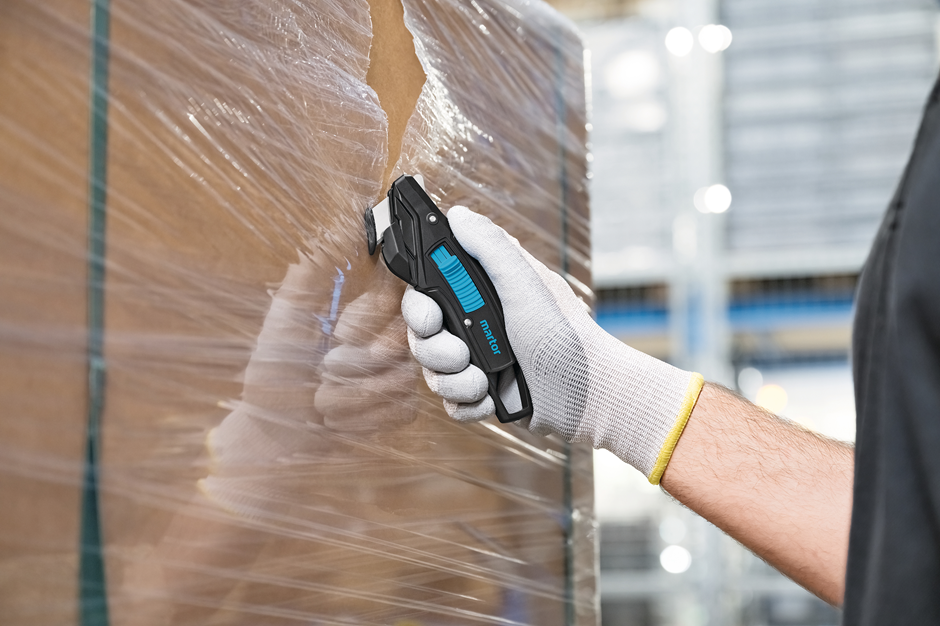
“How many knife types are in use within your facility today?”
If you had to stop and count, that’s already the problem. Most Australian warehouses use five to eight different cutting tools across departments — one for opening boxes in receiving, another for strapping in dispatch, a third in returns processing, and, more often than not, a casual worker using a blade they brought from home. Nobody planned it that way. These quick fixes just built up over time.
These on-the-go adjustments create hidden costs that many businesses don’t see until they review their training and inventory. Too many safety knives being used mean too many training requirements and too many part numbers in the purchasing ordering system. On top of that, every extra tool in circulation creates another opportunity for a worker to pick up the wrong knife and use it incorrectly.
Warehouse knife standardisation addresses this by replacing unnecessary variation with deliberate simplicity, reducing management costs.
|
How many knife types are in use across your facility today? Count every cutting tool in active use — including what casual and contractor staff bring from home. If the number is four or more, your facility is likely carrying hidden costs in training time, blade inventory, and safety compliance. Standardisation can reduce that complexity. Audit your knife mix not to see what it could safe you. |
Each additional knife type in your facility creates a separate training requirement. Different blade replacement processes. Different safe-use protocols. Different handling expectations. For permanent staff, that’s manageable as, over time, workers learn their department’s tools. For casuals, contractors, or anyone moving between departments, it’s where incidents can happen.
Improper use is one of the most common contributors to workplace knife injuries — and it’s almost always a training gap, not a worker failing. When procedures vary from department to department, workers fall back on assumptions that don’t align with what’s in their hands.
A cutting incident results in medical leave, lost productivity, incident reporting, and corrective action. If the injury involves a personal cutter brought from home, the liability picture gets more complicated.
Blade inventory is another problem that aggravates the issue. Multiple knife types mean multiple blade SKUs and a greater risk of the wrong blade ending up with the wrong tool. For operations teams, this adds unnecessary complexity and high costs.

Why Warehouse Knife Standardisation Improves Operations
Standardisation is a principle that businesses apply across the board. Cutting tools deserve the same treatment.
When a warehouse consolidates to two or three versatile safety knives to cover most cutting tasks, training becomes consistent, and knife use becomes ingrained in memory. New employees learn faster with less supervision. When every worker across every department uses the same tool the same way, supervisors can monitor and correct technique at a glance. Safety audits simplify, and toolbox talks can cover the entire facility in one session rather than five.
From a procurement standpoint, fewer tool types mean fewer SKUs and simpler reorder systems. Together, these changes improve training, procurement, and safety at once.
An Example: How a Distribution Centre Could Reset Its Cutting Tool Programme
The scenario below is a composite, drawn from the patterns we see repeatedly across Australian distribution centres — not a single named facility.
|
Picture a distribution centre handling fast-moving consumer goods, using six different types of knives across four departments: fixed-blade box cutters in receiving, two different strap cutters in dispatch depending on the shift, a retractable utility knife in returns, and, during peak season, casual staff regularly bringing their own blades from home. A minor cutting accident can trigger a full safety audit. The manager reviewing the incident finds no single documented procedure covering the use of cutting tools, no consistent training records, excessive blade stocks that vary by department, and every supervisor using their own informal approach to knife use. Over the following eight weeks, the facility selects two MARTOR safety knives to cover the full range of applications, runs a tool amnesty, and delivers one 15-minute Toolbox Talk across all departments simultaneously. Within a quarter, casual induction time drops sharply, blade SKUs consolidate to a fraction of their former levels, and the facility records no cutting incidents over the following six months. It’s a sentiment we often hear in scenarios like this: teams describe the change as simply getting everyone on the same page. |
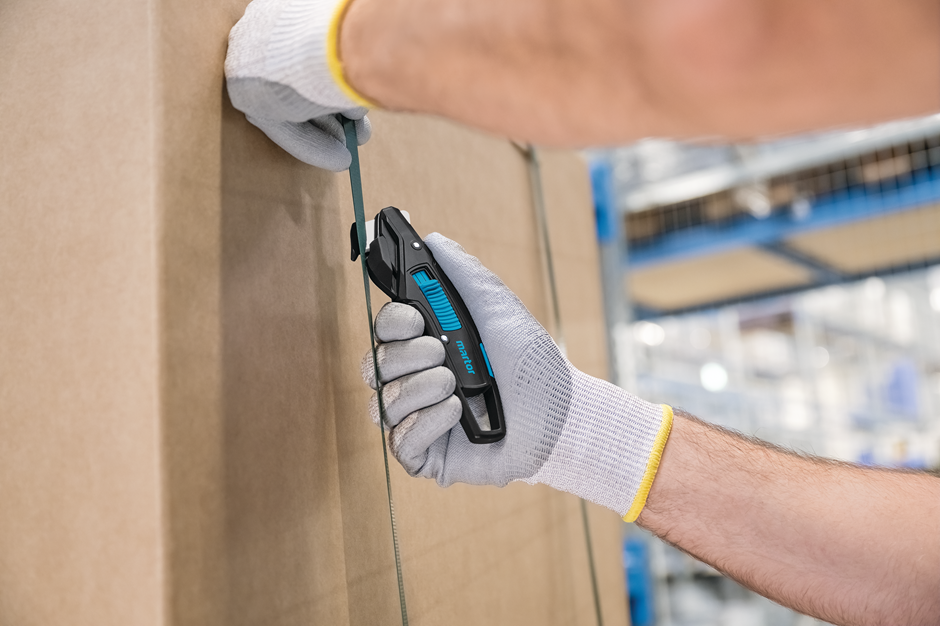
MARTOR’s 4-Step Cutting Tool Consolidation Framework
Step 1 — Conduct a Cutting Task Audit
Walk through every department and document what’s being cut and with what tool. Talk to casual and contractor staff, because personal knives brought from home are a common gap that audits often identify. In most warehouses, the large majority of cutting tasks involve similar materials and cut types — that overlap is where standardisation becomes viable.
Step 2 — Select 2–3 Versatile Safety Knives
Choose tools based on versatility, ease of blade replacement, and training — not just unit cost. MARTOR’s range covers box opening, strapping, film cutting, and precision tasks, with automatic blade retraction and tool-free blade change across several models. It’s important to identify exceptions such as food-safe environments and heavy-duty cutting, but keep these minimal and documented so they don’t create a new proliferation problem.
→ View MARTOR’s safety knife range to find the right fit for your facility.
Step 3 — Phase Out Non-Standard Tools
Before rollout, brief supervisors first. They need to be on board; otherwise, the rest won’t stick. Run a tool amnesty to collect legacy and personal cutters, and issue approved replacements at the same time. If workers are resistant, give them hands-on time with the new tool before the switchover.
Step 4 — Introduce One Facility-Wide Training Programme
Replace multiple training sessions with a single 15-minute Toolbox Talk across all areas, covering correct handling, blade replacement, and incident response — same training and the same expectations across the facility. Simpler training improves retention.
→ Talk to MARTOR Australia’s team about building a Toolbox Talk for your facility.
| Common Mistakes During Rollout
Skipping the audit. Jumping straight to tool selection without mapping current usage means you’ll likely miss applications and face pushback when the new knife doesn’t cover a task nobody documented. Briefing staff before supervisors. If floor supervisors don’t understand the programme before workers do, they can’t reinforce it. Brief leadership first, every time. Training once and assuming it’s done. Run the Toolbox Talk for every new starter, not just at launch. Standardisation only holds if training is ongoing. |
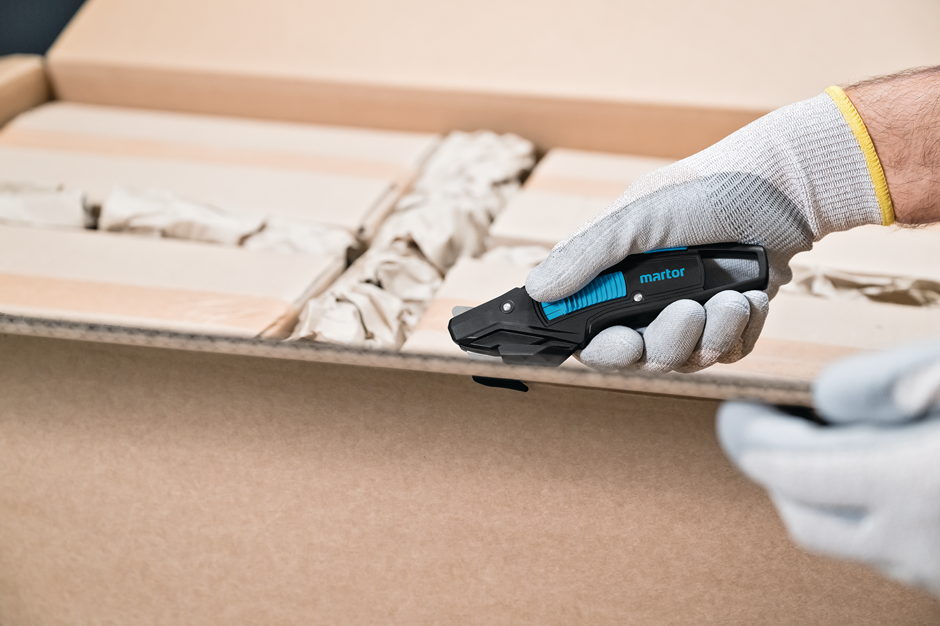
Results Australian Distribution Centres Can Expect
The outcomes from cutting tool consolidation show up across several areas of the business:
-
Reduced training time — fewer induction sessions, shorter onboarding for casuals, and less supervisor time pulled into safety briefings.
-
Fewer blade inventory SKUs — simpler procurement and less risk of blade mismatches.
-
Faster onboarding — when there is only one procedure to learn, it’s much quicker for new starters to reach safe competency.
-
Improved safety compliance — consistent training produces consistent behaviour; supervisors can identify and correct deviations faster.
-
Lower administration burden — fewer tool types mean simpler incident investigations and cleaner audit trails.
Standardisation Is a Cost-Control Strategy, Not Just a Safety Initiative
The Simplest Systems Are the Ones People Actually Follow
A safety programme only works if workers remember it three months after induction. That test becomes even more important under the pressure of a new starter or a peak season influx of casuals.
Standardising your cutting tools is one of the few operational changes that make it easy. One knife and one procedure across the facility. There’s nothing to second-guess and nothing to forget.
Warehouses that follow this see fewer incidents, faster onboarding, leaner procurement, and safety compliance that doesn’t require constant supervision.
If you haven’t reviewed your current knife mix recently, talk to MARTOR Australia about where standardisation could make the biggest difference in your operations.
→ Start with an audit of your current knife mix, then talk with MARTOR Australia about which tools best fit your warehouse operations.