TRIMMEX Deburring Tools for Precision Edge Finishing
Drilling, machining, cutting, and extruding all leave burrs. Those sharp residual edges cut workers and cause assembly failures. They produce surface finishes that fail production standards.
MARTOR Australia's TRIMMEX range removes them cleanly across metal, plastic, rubber, and composite materials — internal and external edges, curved and straight surfaces.
Unaddressed burrs cause four specific problems:
-
Cut injuries during handling and assembly
-
Quality failures from poor surface finish
-
Assembly issues when components don't seat correctly
-
Equipment damage from loose fragments
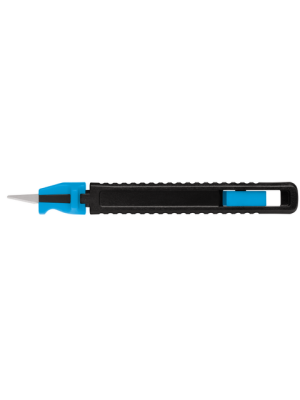
TRIMMEX deburring knives handle precision hand work where a file is too slow and a power tool removes too much material. The range covers soft materials — plastic, rubber, fleece, felt — and hard ones, including metal and aluminium. One tool handles all of it. Soft-grip handles reduce hand fatigue on long runs. Replaceable blades keep costs down.
Blade material and safety construction determine long-term performance. High-speed steel or carbide holds an edge longer. A tool that works across multiple substrates reduces what you need to stock.
TRIMMEX tools are blade-based and hand-held — built for jobs where finish quality and control matter more than speed.
Explore the full TRIMMEX deburring range → Contact MARTOR Australia → Request a quote →
FAQ
1. Can deburring tools handle both curved and straight surfaces?
Yes. TRIMMEX deburring cutters have flexible blade geometry that adapts to both curved and straight surfaces. The rounded-tip scalpel blade and ergonomic pivoting design allow users to follow contours on curved edges and straight surfaces.
2. What features should I look for in a deburring tool?
A deburring tool should have a soft-grip handle to reduce hand fatigue. Blades should be replaceable to keep costs down. Rounded-tip and concealed blade designs are also very useful to reduce cut risk during use and storage. It should also have a non-slip grip for accurate control across different materials. Adjustable depth settings are a great advantage when handling different burr sizes.
3. Can deburring tools be used on both internal and external edges?
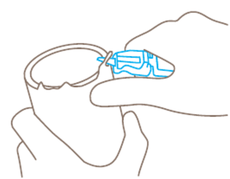
Yes. Double-ended or dual-purpose deburring tools deburr inner and outer diameters. TRIMMEX specifically works on internal edges (inside corners, holes) and external edges (outside profiles) due to its pointed front design and flexible blade.
4. What is the difference between a deburring knife and a deburring tool?
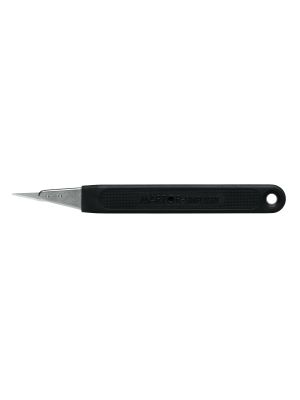
A deburring knife is a blade-based tool designed for precise, controlled edge work — the TRIMMEX SIMPLASTO is a good example. Deburring tool is the broader category, covering knives, scrapers, files, rotary brushes, and power tools.
5. What are deburr tools used for?
Deburr tools remove burrs — small, rough edges or raised material left after cutting, drilling, milling, or machining. These burrs commonly appear on tubing and machined components.
6. What types of materials can deburring tools work on?
TRIMMEX deburring tools work on soft materials such as plastic burr, rubber burr, fleece, felt, coated film, laminated film, and balsa wood. It also works on hard materials like steel, aluminium, copper tubing, stainless steel, brass, cast iron, and abrasive materials.
7. Can one deburring tool handle multiple edge types and materials?
Yes. That's exactly what TRIMMEX deburring tools are designed for. Unlike single-purpose files or scrapers, TRIMMEX deburr tools work across:
-
Multiple materials: Plastic, rubber, metal, and composites with one tool
-
Multiple edge types: Internal (inside corners) and external (outside profiles)
-
Multiple surface shapes: Curved contours and straight edges