
Workplace Safety Training Simplified: How Tool Standardisation Improves WHS Compliance
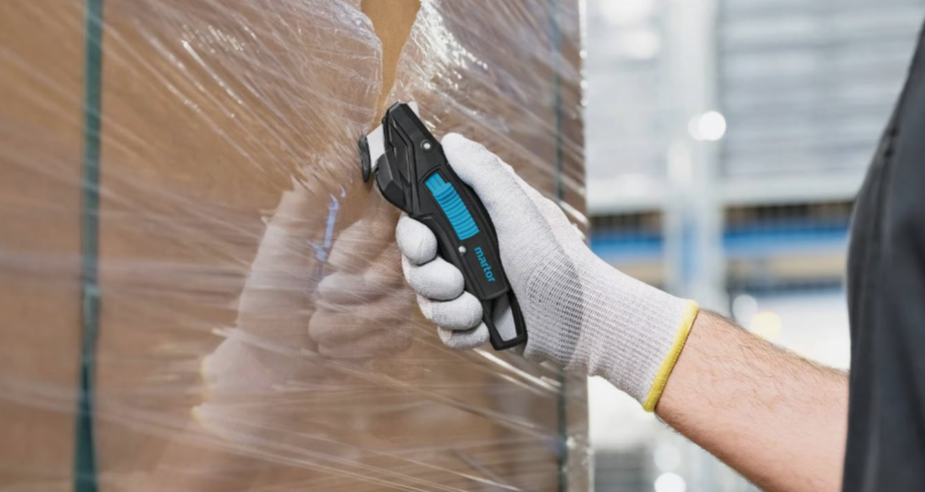
Worker cutting shrink wrap on palletised goods with SECUMAX 370 safety knife
Walk through most Australian warehouses and you'll find three, four, sometimes five different types of cutting tools scattered across the site. Different safety knives for different jobs. Different blades for different materials. Each one with its own technique, its own quirks, its own WHS training requirements.
Sounds efficient, right? Different tools for different tasks?
Except here's what actually happens: workplace safety training becomes complicated, supervision becomes guesswork, and WHS compliance becomes a documentation nightmare. Your safety manager is trying to track which worker completed which safety training module, which cutting technique applies to which material, and which incident report form needs updating after someone grabbed the wrong tool.
The Hidden Cost of Complex WHS Safety Training Programs
Under Australian WHS legislation, employers must provide adequate safety training, instruction, and supervision for all cutting tools. Every additional knife type adds complexity to your workplace safety training program:
Another technique to teach in safety induction training
Another WHS safety briefing to document
Another variable to track in your workplace safety compliance records
Another thing new workers need to remember under pressure
According to Safe Work Australia, employers must ensure workers receive information, training, instruction and supervision required to remain healthy and safe. But that WHS compliance obligation gets harder when you're managing multiple tool types with different safety procedures.
Factor in real-world conditions—fatigue after long shifts, pressure to meet targets, workers covering unfamiliar areas, agency staff rotating through who missed last month's workplace safety training—and the complexity multiplies.
How Safety Knife Standardisation Simplifies WHS Compliance
Standardising your safety knives—where it makes sense for your workplace safety program—simplifies the entire training and compliance system. One knife. One technique. One set of WHS safety procedures. Everyone knows exactly what they're using and how to use it safely.
· Faster Safety Induction and Onboarding Training
When new workers learn one safety knife that handles most cutting tasks, they're productive faster. Your workplace safety training doesn't need multiple modules covering different tools—you focus on teaching the right technique for one reliable knife. This aligns with Safe Work Australia's guidance on providing clear, easy-to-understand safety information.
· Consistent Technique Becomes Workplace Safety Habit
Repetition builds muscle memory. When your team uses the same safety knife day after day, correct technique becomes automatic. They're not switching between different grips, different blade exposure systems, different cutting angles. This consistency supports your WHS training objectives and reduces the risk of workplace injuries from tool misuse.
· Simpler WHS Compliance Documentation
One safety knife type means one set of risk assessments. One safety training record template. One incident investigation procedure. Your WHS compliance documentation becomes clearer, easier to maintain, and simpler to audit—meeting your obligations under Australian workplace safety legislation.
· Reduced Tool-Related Variables in Safety Incidents
When a workplace injury occurs, you need to identify root causes quickly. With five different knife types, you're investigating five different sets of variables. With standardised safety knives, you can focus on what actually matters for your WHS compliance reporting—was it training, fatigue, process design, or something else?
The SECUMAX 370: Standardising Safety Knives for Heavy-Duty Cardboard
Here's where workplace safety training and tool standardisation used to conflict: concealed blade safety knives couldn't handle thick cardboard cutting tasks. So even if you wanted one knife for everything, you'd still need exposed blade utility knives for 3-ply boxes. Back to multiple tools. Back to complex safety training programs.
The SECUMAX 370 changes that calculation. It's the first concealed blade safety knife with 10mm cutting depth—enough to handle heavy-duty cardboard that previously required exposed blades.
This means Australian warehouses can standardise on concealed blade technology for a wider range of workplace cutting tasks:
• Shrink wrap and pallet strapping
• Single-wall and double-wall boxes
• 3-ply corrugated cardboard cutting
• Adhesive tape (built-in 6mm tape splitter)
One safety knife. Multiple applications. Blade stays fully concealed across all cutting tasks—simplifying your workplace safety training requirements and improving WHS compliance.
How Safety Knife Design Reduces Reliance on Perfect Training Retention
Even workers who've completed comprehensive workplace safety training have bad days. Fatigue hits after an eight-hour shift. Distractions happen. Time pressure creates shortcuts. This is normal human behaviour under real working conditions.
Safety knives that rely entirely on perfect technique and training retention leave no margin for error. One moment of inattention, one rushed cut, one slip in grip—and you've got a workplace injury despite your WHS training program.
The SECUMAX 370 builds workplace safety protection into the design, supporting your training program:
· Concealed Blade = Built-in Safety Training Support
The blade never contacts skin or products, even when technique isn't perfect. The protective housing does the job that perfect concentration and flawless execution used to do—reducing workplace injuries even when workers deviate from ideal safety procedures.
· Adjustable Depth Prevents Over-Cutting in Workplace Tasks
Set the slider to match your material—6mm for single-wall, 10mm for 3-ply cardboard. Once set, workers can't accidentally extend the blade further. The tool enforces safe cutting depth, supporting your workplace safety training objectives.
· Ambidextrous Design Reduces WHS Training Variation
Right-handed or left-handed workers use the same safety knife the same way. Your WHS training program doesn't need different techniques for different people—everyone learns one consistent method that meets Australian workplace safety standards.
This is what good workplace safety design does: it supports correct behaviour taught in WHS training while reducing the consequences of human error. Training teaches best practice. The safety knife design prevents the worst outcomes.
Updating Your Workplace Safety Knife Program for Better WHS Compliance
If you're reviewing your workplace cutting tools and safety training requirements—whether you're updating an existing WHS compliance program or building one from scratch—the SECUMAX 370 gives you another option for tasks that used to require exposed blades.
Here's what to consider for your workplace safety program:
· Map Your Cutting Tasks for Safety Training Needs
What materials are you cutting most often in your warehouse operations? How thick are they? The SECUMAX 370 handles up to 10mm (3-ply cardboard), which covers the majority of warehouse cutting tasks. If you're mostly dealing with film, tape, and standard boxes, one concealed blade safety knife could replace multiple tool types—simplifying your workplace safety training program.
· Calculate the WHS Training Simplification
How many different safety knife types are you currently including in workplace safety training? What would it mean to reduce that to one or two standardised tools? Less training time. Faster onboarding. Fewer technique variations to supervise. More consistent workplace safety outcomes that improve your WHS compliance.
· Factor in Real-World Workplace Conditions
Do you have high worker turnover requiring frequent safety training? Agency staff rotating through? Night shifts with minimal supervision? These conditions favour safety knives with built-in protection features that don't rely solely on perfect technique and constant adherence to WHS training procedures.
SECUMAX 370 Features That Support Workplace Safety Training
The SECUMAX 370 was designed to be a reliable, repeatable safety knife that workers can use consistently to support your WHS training objectives:
• 60 grams—light enough for all-shift use without worker fatigue
• 163mm long—fits any hand comfortably for consistent workplace use
• Thumb-operated slider—intuitive depth adjustment reduces WHS training complexity
• Blue blade change button—no tools required, supports workplace safety procedures
• 60% recycled plastic construction—sustainable and durable for Australian workplaces
• TÜV GS certified—highest safety standard, supports WHS compliance requirements
These aren't just specs. They're features that make workplace safety training stick and reduce variability in how the safety knife gets used in daily warehouse operations.
Workplace Safety Training FAQ: Tool Standardisation & WHS Compliance
What is required for workplace safety training in Australia?
Under Australian WHS legislation, employers must provide workers with adequate information, safety training, instruction and supervision to perform work safely. This includes tool-specific training, hazard identification, and safe work procedures. Safe Work Australia guidelines require training to be clear, easy to understand, and tailored to workplace risks.
How does tool standardisation improve WHS compliance?
Standardising safety knives simplifies WHS compliance by reducing training complexity, streamlining documentation, and creating consistent safety procedures across your workplace. Instead of managing multiple tool types with different training requirements, you focus on one standardised approach that's easier to teach, supervise, and maintain in compliance records.
Can one safety knife replace multiple cutting tools in warehouse operations?
Yes, with the right specifications. The SECUMAX 370 concealed blade safety knife handles shrink wrap, pallet strapping, single-wall boxes, double-wall boxes, and 3-ply corrugated cardboard (up to 10mm thick). This covers most warehouse cutting tasks that previously required multiple tool types, allowing you to standardise on safer concealed blade technology while simplifying workplace safety training.
What WHS training records do I need to keep for cutting tools?
Australian workplace safety regulations require you to keep records of safety induction training, tool-specific training sessions, and competency assessments. Documentation should include dates, attendees, content covered, and verification that workers understood the training. These WHS compliance records demonstrate due diligence in meeting your obligations under Australian safety legislation.
How does concealed blade technology support workplace safety programs?
Concealed blade safety knives provide built-in protection that doesn't rely solely on perfect technique or training retention. Even when workers are fatigued or distracted, the protective housing prevents blade contact with skin or products. This engineering control aligns with Safe Work Australia's hierarchy of controls by eliminating the hazard at the source rather than managing it through behaviour alone.
The Bottom Line on Workplace Safety Training and Tool Standardisation
You can't standardise everything. Some specialist warehouse tasks will always need specialist tools. But if you can reduce the number of different safety knives your team needs to learn, you make WHS training simpler, supervision easier, and workplace safety compliance clearer.
The SECUMAX 370 expands what's possible with concealed blade safety knives. It handles the thick cardboard cutting that used to require exposed blades—which means you can standardise on safer technology for more of your cutting tasks while simplifying your workplace safety training program.
Simpler WHS training. Consistent technique. Built-in protection. Better compliance. That's the advantage of safety knives designed to support how people actually work in Australian warehouses.
See How the SECUMAX 370 Fits Your Workplace Safety Program
Thinking about updating your safety knife program to simplify WHS training and compliance? Want to see if standardising on concealed blade technology makes sense for your Australian warehouse operations?
Check out the SECUMAX 370 specifications and workplace safety features →
Or get in touch with our team to discuss which MARTOR safety knives make sense for your specific cutting tasks and workplace safety training requirements. We've been helping Australian businesses improve WHS compliance for years—we can help you figure out what will actually work for your operation.