
Is the SECUMAX 370 Right for Your Warehouse? A Practical Guide to Choosing the Right Safety Knife
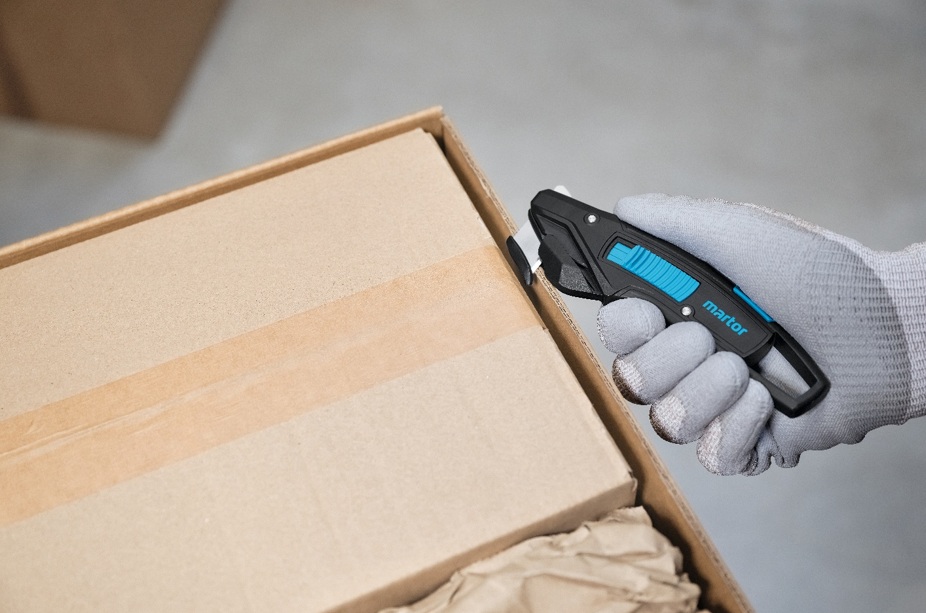
SECUMAX 370 cutting 3-ply cardboard in warehouse setting
Here's a question we get asked often: "Should we switch our entire warehouse to the SECUMAX 370?"
The honest answer? Maybe. Maybe not.
Not every safety knife suits every cutting task. And that's completely fine. The goal isn't to find one universal tool—it's to match the right knife to the right application while managing risk effectively.
The SECUMAX 370 does something specific very well: it cuts thick cardboard with a fully concealed blade. That's its strength. Understanding where it fits—and where other safety knives might work better—is essential for making informed, compliant decisions about your cutting tools.
When the SECUMAX 370 Makes Sense for Your Workplace
The SECUMAX 370 was designed to solve a specific problem: warehouses needed a concealed blade safety knife powerful enough to cut 3-ply cardboard. Previous concealed blade models maxed out at 6-7mm—great for film and tape, useless for thick corrugated.
So, when does the SECUMAX 370 fit your operation?
- You Regularly Cut Thick Cardboard and 3-Ply Corrugated
This is the SECUMAX 370's core strength. If your warehouse handles heavy-duty cardboard boxes, double-wall corrugated, or 3-ply packaging, you've probably been using exposed blade utility knives because concealed blade knives couldn't reach deep enough.
The SECUMAX 370 changes that. With 10mm cutting depth and a reinforced 0.63mm blade, it handles firm materials while keeping the blade fully concealed. No blade exposure. No accidental contact with hands or products. - You Want to Reduce Reliance on Exposed Blade Knives
Exposed blade knives create inherent risks. Even with proper training and supervision, fatigue happens. Distractions occur. Workers make mistakes. The blade is always accessible.
If you're reviewing your workplace safety program and want to minimize exposed blade usage, the SECUMAX 370 lets you standardise on concealed blade technology for cutting tasks that previously required traditional box cutters. This aligns with Australian WHS best practice: eliminate the hazard at the source rather than relying solely on training and PPE. - You Prioritise Injury Prevention Through Safety Knife Design
Some warehouses manage safety primarily through training and procedures. Others prefer tools that build protection into the design.
The SECUMAX 370 supports the second approach. The protective housing prevents blade contact even when technique isn't perfect. Release the slider while cutting, and the blade automatically retracts—adding another layer of protection when workers are fatigued or rushed.
If your safety philosophy is "design the hazard out," the SECUMAX 370's concealed blade mechanism directly supports that. - You're Reviewing Safety Knives as Part of WHS Risk Assessment
Under Australian WHS legislation, employers must identify hazards and control risks so far as reasonably practicable. If your risk assessment identifies cutting injuries as a significant workplace hazard, you're required to consider control measures.
The hierarchy of controls prioritises elimination, then substitution. The SECUMAX 370 represents a substitution control: replacing exposed blade tools with concealed blade alternatives for applicable cutting tasks.
If you're updating your safe work procedures, reviewing incident data, or responding to WorkSafe recommendations, the SECUMAX 370 gives you a documented option for thick cardboard cutting with TÜV GS safety certification.
When Another Safety Knife Might Work Better
The SECUMAX 370 isn't designed for every cutting task. Here's when other MARTOR safety knives might be more appropriate:
- Very Deep Blade Penetration Required
The SECUMAX 370 maxes out at 10mm cutting depth. If you're cutting materials thicker than this—heavy foam, dense rubber, thick plastic materials—you'll need a different knife design with deeper blade access. - Extremely Light Materials (Film, Paper, Single-Layer Foil)
For very thin materials like plastic film, paper, or single-layer foil, the SECUMAX 350 or SECUMAX SNITTY would be better choices. They're optimised for lighter materials with thinner blade profiles and more precise cutting control for delicate work. - Precision Cutting and Detailed Work
The SECUMAX 370 is built for robust cardboard cutting, not precision detail work. If you need fine cuts, trimming, or detailed material preparation, other safety knife models with different blade geometries would be more suitable. - Tasks Requiring Fully Retractable or Auto-Retracting Blades
While the SECUMAX 370 has a concealed blade, it uses a slider mechanism rather than automatic blade retraction. If your workplace specifically requires auto-retracting knife designs, other MARTOR models with different blade mechanisms might better match your safety requirements.
The right safety knife depends on matching the tool to your specific cutting applications. That's why MARTOR manufactures different safety knife models—each optimised for different materials and workplace tasks.
How to Make an Informed Safety Knife Selection Decision
Introducing any new safety knife to your workplace should be a structured process, not an impulse purchase. Here's how to do it properly:
Conduct a Proper WHS Risk Assessment
Start with your hazards and risks, not with a product. What are your workers cutting? How thick are the materials? What injuries have occurred with current tools? What control measures are already in place?
Safe Work Australia requires risk assessments to identify hazards, assess risks, and implement controls. Your cutting tool selection should follow from this process. If your assessment identifies "cutting 3-ply cardboard with exposed blade knives" as a risk, then you've established the need. The SECUMAX 370 becomes a potential control measure, not just a purchase.
Run a Workplace Trial and Evaluation
Theory looks great on paper. Reality matters more.
Before committing to a full rollout, trial the SECUMAX 370 with a small group of workers in your actual workplace conditions. Does it handle your specific cardboard types? Do workers find it comfortable for full shifts? Does it integrate with your existing procedures?
Get feedback on:
- Cutting performance on your materials
- Ergonomic comfort during typical work
- Blade change ease and frequency
- Any limitations or concerns from users
This trial period gives you real data for your safety knife decision, not just manufacturer specifications.
Consult with Workers Who'll Actually Use the Knife
Australian WHS legislation requires worker consultation on safety matters. This isn't just a compliance box to tick—workers who use cutting tools daily have practical insights you won't get from a product brochure.
Ask your team:
- Does the SECUMAX 370 work for the range of cutting tasks you perform?
- Are there specific situations where it doesn't work well?
- Would you feel safer using this compared to current tools?
- What concerns or questions do you have?
Document this consultation. It demonstrates due diligence and captures valuable operational knowledge.
Provide Proper Training and Supervision
Even the safest knife design requires proper training. Before rolling out the SECUMAX 370, ensure workers understand:
- How the adjustable depth slider works and when to use different settings
- How to change blades safely using the blue change button
- Proper cutting technique to maximise the concealed blade protection
- When to use the tape splitter function vs. the main cutting blade
- What materials the SECUMAX 370 is and isn't designed for
Keep training records as part of your WHS compliance documentation. These demonstrate you've met your obligation to provide adequate instruction for safe tool use.
Technical Specifications: Does the SECUMAX 370 Match Your Requirements?
Here's what the SECUMAX 370 delivers, so you can compare it to your workplace needs:
Cutting Depth and Blade Specifications
- Variable cutting depth: 6-10mm via thumb-operated slider
- Blade thickness: 0.63mm (reinforced for firm materials)
- Blade type: Concealed design (never contacts skin or products)
- Tape splitter: 6mm integrated on blade head top
Ergonomics and Usability
- Weight: 60 grams (light enough for all-shift use)
- Length: 163mm
- Ambidextrous design: Works for left and right-handed workers
- Blade change: Tool-free via blue change button
- Grip: Optimised texture for secure handling
Safety Certifications and Sustainability
- TÜV GS safety certification: Third-party verified workplace safety
- MARTOR ECO line: At least 60% recycled plastic construction
- Glass-fibre reinforced handle: Durable for long-term use
- German manufacturing: Consistent quality control
These specifications matter when you're evaluating whether the SECUMAX 370 technically matches your cutting tasks and workplace safety requirements.
The Bottom Line: Choosing the Right Safety Knife for Your Workplace
The SECUMAX 370 isn't the right knife for every workplace or every cutting task. It's the right knife for specific applications: thick cardboard cutting where you want concealed blade protection and the ability to standardise on safer technology.
If your warehouse regularly cuts 3-ply corrugated, handles heavy cardboard boxes, and wants to reduce reliance on exposed blade tools, the SECUMAX 370 deserves serious consideration. It solves a real problem: giving you 10mm cutting depth without blade exposure.
If you're cutting primarily lighter materials, need deeper blade penetration than 10mm, or require different blade mechanisms, other safety knife options would be more appropriate.
The key is making informed decisions based on:
- Proper WHS risk assessment of your cutting tasks
- Real workplace trials with your actual materials
- Consultation with workers who'll use the tool
- Adequate training and supervision for safe use
That's how you choose safety knives that improve workplace safety outcomes—by matching tools to tasks, not just buying the latest product.
See If the SECUMAX 370 Fits Your Cutting Applications
Still evaluating whether the SECUMAX 370 is right for your workplace? Want to see detailed specifications or discuss your specific cutting tasks with our team?
View complete SECUMAX 370 specifications and technical details →
Or get in touch with MARTOR Australia to discuss your cutting applications, arrange a workplace trial, or talk through which safety knife models would work best for your specific needs. We've been doing this for 25+ years—we can help you figure out what'll work in your operation.
The right safety knife choice starts with understanding your requirements, not with a product catalogue.