
Beyond Compliance: How Knife Safety Training Empowers Safer Workplaces
At MARTOR, we firmly believe that knife safety is nothing short of essential. High-quality safety knives are indispensable across all industries, including food manufacturing, logistics, warehousing, and distribution.
While compliance with workplace safety standards ensures legal requirements are met, the true impact comes from knife safety training. When employees understand why safe cutting practices matter—not just what they are required to do—it cultivates a safety-first mindset, encourages personal responsibility and reinforces a positive workplace culture.
Knife safety training goes beyond accident prevention; it strengthens teams and uplifts the workforce. Investing in education demonstrates that an organisation values its people, builds trust between management and staff, and empowers employees to make safer, smarter decisions every day. Over time, this culture of safety boosts morale, fosters collaboration and creates an environment where staff feel confident, respected and engaged in maintaining workplace safety.
Knife Safety Training: Going Beyond Compliance
While compliance typically focuses on the actions required to avoid penalties, education explains why those actions matter beyond meeting minimum legal obligations. Many organisations understand their duty to provide safety training, yet when training is treated as a checkbox exercise, its effectiveness is limited.
A proactive approach to workplace knife safety training helps teams:
- Recognise hazards before they become incidents
- Understand proper tool selection and safe cutting techniques
- Build confidence when performing high-risk tasks
- Take ownership of safe behaviour
Rather than simply knowing what not to do, employees learn how to perform their work safely and efficiently—and understand the reasons behind best practices. Regulatory bodies such as WorkSafe Queensland emphasise that workers should be trained not only in selecting and using the correct tools, but also in safe cutting methods, risk management around others and proper maintenance of equipment. This approach helps reduce the likelihood of accidents while fostering a culture of responsibility, awareness and continuous improvement.
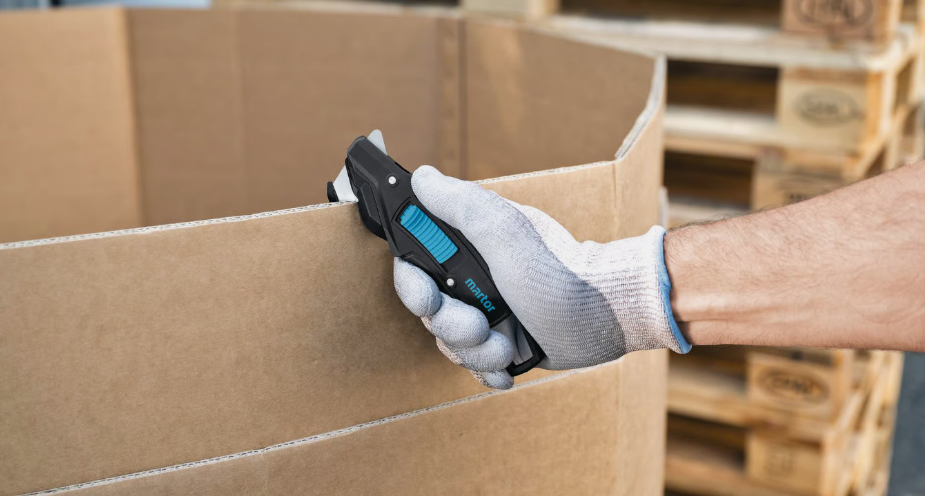
Figure 1- SECUMAX 370 Safety Knife
The Cultural Benefits of Workplace Knife Safety Training
1. Boosting Morale Through Knowledge and Confidence
Nothing undermines morale faster than employees feeling unsafe or unsupported. When workers are unprepared for tasks involving cutting tools, hesitation, fear of injury and reduced confidence can follow. In high-risk roles, this can lead to stress, reduced productivity and lower job satisfaction.
Comprehensive knife safety training changes this dynamic. By equipping employees with the knowledge, practical skills and confidence to work safely, organisations can:
-
Demonstrate a genuine commitment to worker wellbeing
-
Reduce stress and anxiety associated with hazardous tasks
-
Boost confidence, competence and job satisfaction
-
Encourage shared responsibility and proactive safety engagement
When employees feel secure and capable, they work more efficiently and contribute to a workplace culture built on safety, trust and collaboration.
2. Building a Safety-First Mindset
A genuine safety-first mindset is shaped by culture, not rules alone. Knife safety training plays a key role in influencing everyday behaviours and decision-making. Instead of reacting to incidents, teams learn to identify and prevent risks before they occur.
Employees develop habits such as:
-
Selecting appropriate cutting tools with built-in safety features
-
Inspecting tools before use and reporting wear or damage
-
Maintaining clean, organised and hazard-free workspaces
-
Supporting colleagues and reinforcing safe practices
This proactive approach not only prevents injuries but also improves workflow, reduces downtime and enhances overall operational efficiency.
3. Strengthening Teams in High-Risk Environments
Industries such as logistics, manufacturing, food processing and packaging operate in fast-paced, physically demanding environments. Knife safety training helps mitigate inherent risks while reinforcing teamwork, communication and shared accountability.
When safety becomes a collective priority, employees feel empowered to speak up, ask questions and support one another. Over time, this shared responsibility prevents accidents while driving higher efficiency, improved quality outcomes and a more engaged workforce.
Real-World Examples of Effective Knife Safety Training
Scenario 1: Warehouse Packaging Lines
In busy warehouse environments, employees may spend hours cutting cardboard, strapping and plastic film. Without proper knife safety training, workers may instinctively reach for sharp utility knives, increasing the risk of slips, accidental cuts or product damage.
Solution: Introducing high-quality auto-retractable safety knives—such as the MARTOR SECUNORM MIZAR or SECUNORM 525—significantly helps reduce injury risk. These knives automatically retract the blade once the cut is completed, limiting exposure to sharp edges. When combined with targeted training covering cutting angles, safe handling and regular inspections, organisations often see fewer injuries and a stronger culture of care and awareness.
Scenario 2: High-Volume Repetitive Cutting Tasks
In factory settings, repetitive cutting tasks performed under pressure can contribute to repetitive strain injuries if tools are poorly designed or unsuitable for prolonged use.
Solution: The MARTOR SECUMAX 350 Safety Cutter features a concealed blade and easy blade replacement, making it ideal for frequent use. Training employees to select the right tool for each task—rather than defaulting to the first available knife—improves safety, efficiency and confidence. This combination reduces hesitation, minimises injury risk and supports smoother workflows.
Scenario 3: Compact and Specialty Cutting Jobs
In environments such as retail stores and supermarkets, small cutting tasks are often approached with less caution. However, even light-duty tasks can pose risks when tools are oversized or unsuitable.
Solution: The MARTOR SECUMAX 145 Compact Safety Knife is designed for precision and light-duty tasks. Training employees to match tools to specific jobs helps reduce the likelihood of injuries, improves control and encourages thoughtful, task-specific safety behaviours.
Common Questions About Knife Safety Training
Why is knife safety training important in the workplace?
It reduces injuries, improves confidence, and helps employees understand how to work safely with cutting tools across different tasks and environments.
Is providing safety knives enough without training?
No. Even the safest tools require correct selection, handling and maintenance. Training ensures safety features are used effectively.
Which industries benefit most from knife safety training?
Logistics, warehousing, manufacturing, food processing, retail and packaging environments all benefit significantly from structured knife safety education.
Why MARTOR Australia Champions Knife Safety Training
At MARTOR Australia, we have witnessed the transformative impact of safety education across industries. While our safety cutters incorporate advanced protective features, tools alone are only part of the solution.
We support organisations in moving beyond compliance-driven training toward programs that genuinely empower teams. The results are clear:
-
Fewer workplace injuries
-
Improved morale and confidence
-
Higher productivity
-
A stronger, sustainable safety culture
Creating a safety-first workplace starts with the right tools and the knowledge to use them correctly. MARTOR Australia supports Australian and New Zealand workplaces with industry-leading safety knives, practical resources and tailored knife safety training programs.
Explore MARTOR’s range of safety knives and workplace knife safety training resources, or contact MARTOR Australia to discuss solutions that help your teams work confidently, efficiently and safely every day.